

A Comprehensive Guide
In the era of hyper-connectivity, the physical layer of networking—the cabling—remains the bedrock of all digital communication. Whether it is fiber optics for high-speed data centers or Category 6A copper for local area networks (LANs), the quality of the deployment directly dictates the reliability, speed, and longevity of the entire system.
This guide explores the critical phases and best practices required to master cable installation deployment.
1. Strategic Planning and Site Survey
Before a single cable is pulled, a successful deployment begins with a meticulous site survey.
- Pathing and Logistics: Identify the most efficient routes. Avoid areas with high electromagnetic interference (EMI), such as those near heavy machinery, fluorescent lighting ballasts, or power transformers.
- Capacity Planning: Always plan for tomorrow. Industry standards recommend designing for 20-30% future growth in cable density within trays and conduits.
Environmental Assessment: Determine if the environment requires Plenum-rated (CMP) cabling for air-handling spaces or Riser-rated (CMR) for vertical shafts to comply with fire safety codes.
2. Adherence to Global Standards
Mastery in deployment requires strict adherence to international standards to ensure interoperability and performance.
- ANSI/TIA-568: The standard for commercial building telecommunications cabling.
- ISO/IEC 11801: The international standard for general-purpose integrated cabling systems.
BICSI Standards: Following the Building Industry Consulting Service International (BICSI) guidelines ensures that installations meet the highest professional benchmarks.
3. Precision Installation Techniques
The “pull” is the most physically demanding part of the process, but it requires finesse rather than brute force.
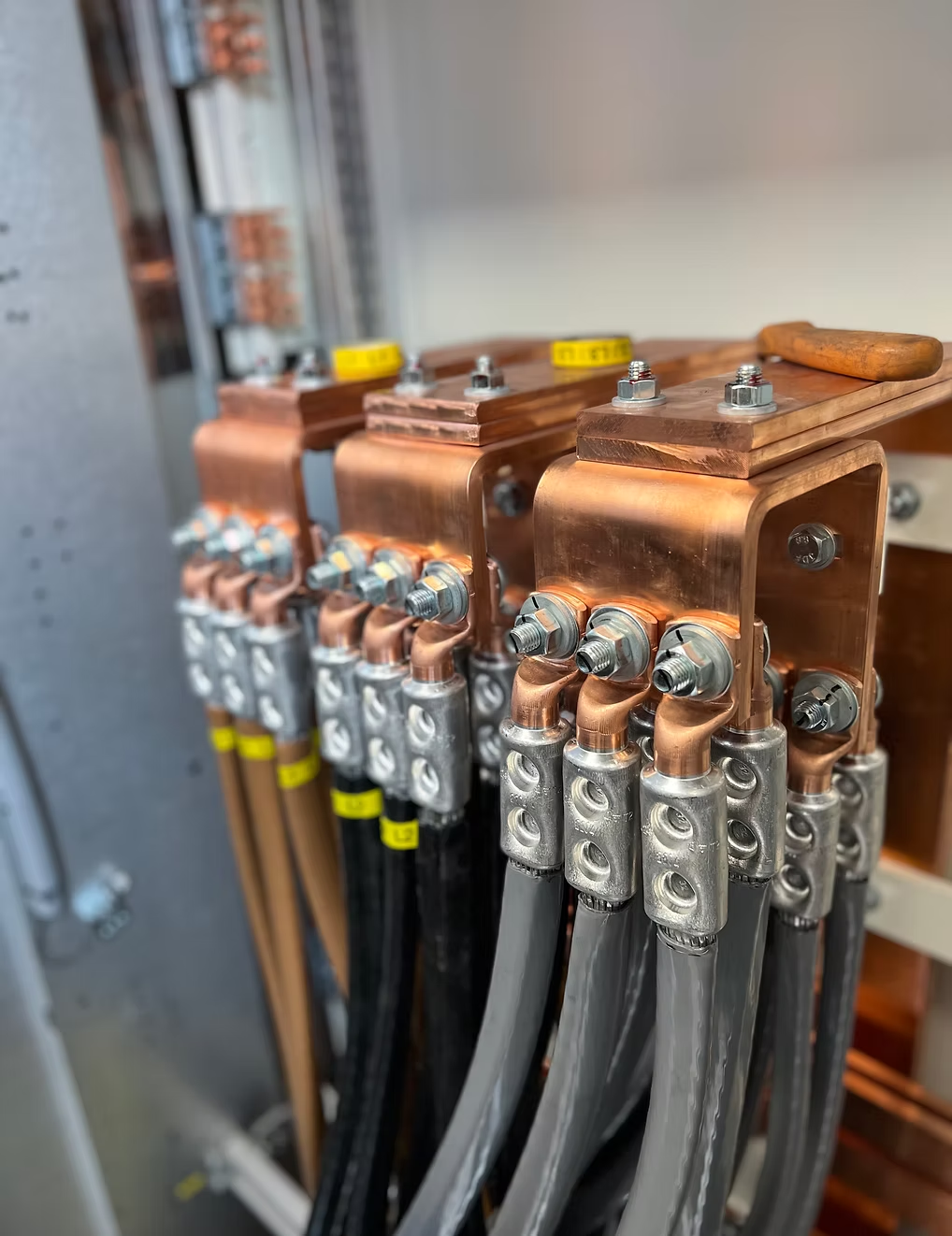
Copper Cabling Best Practices
- Maintain Twist: When terminating, never untwist pairs more than 0.5 inches (12.7 mm). The twist is what cancels out crosstalk.
- Bend Radius: Do not exceed the minimum bend radius—typically 4 times the cable diameter for UTP cables. Kinking a cable can permanently damage its transmission properties.
Avoid Over-tightening: Use Velcro ties instead of plastic zip ties. Over-tightened zip ties can “pinch” the jacket, changing the impedance of the pairs and causing data errors.
Fiber Optic Best Practices
- Cleanliness is paramount: Use specialized cleaning kits for every connector. A single microscopic speck of dust can cause significant signal loss (attenuation).
Tensile Strength: Never exceed the maximum pulling tension. Using a “break-away” swivel during the pull can prevent the fiber from stretching.
4. Sophisticated Cable Management
A “spaghetti” closet is the hallmark of an amateur installation. Master-level deployment prioritizes organization.
- Vertical and Horizontal Managers: Use dedicated management panels to route cables neatly from the switches to the patch panels.
- Color Coding: Implement a color-coding scheme (e.g., Blue for Data, White for Voice, Red for Security/CCTV) to simplify future troubleshooting.
Labeling: Every cable should be labeled at both ends using a durable, printed wrap-around label that corresponds to the project’s logical floor plan.
5. Testing and Certification
Installation is not complete until it is verified. Mastery requires using professional-grade certifiers (such as those from Fluke Networks or NetAlly).
- Wiremap Testing: Ensures every pin is connected correctly.
- Performance Testing: Measuring for Near-End Crosstalk (NEXT), Return Loss, and Attenuation.
Documentation: Generate a digital report for the client providing “birth certificates” for every link in the building. This provides a baseline for any future performance issues.
6. Safety and Compliance
Safety is never optional. Installers must be trained in:
- Ladder and Lift Safety: For high-altitude runs.
- Confined Space Entry: For work in tunnels or crawlspaces.
Proper Grounding and Bonding: Essential for protecting equipment from power surges and reducing signal noise.
Conclusion
Mastering cable deployment is a blend of physical labor, engineering precision, and organizational discipline. By focusing on standards, protecting the physical integrity of the media, and documenting every connection, installers provide the “invisible” infrastructure that allows the modern digital world to function at peak efficiency.