
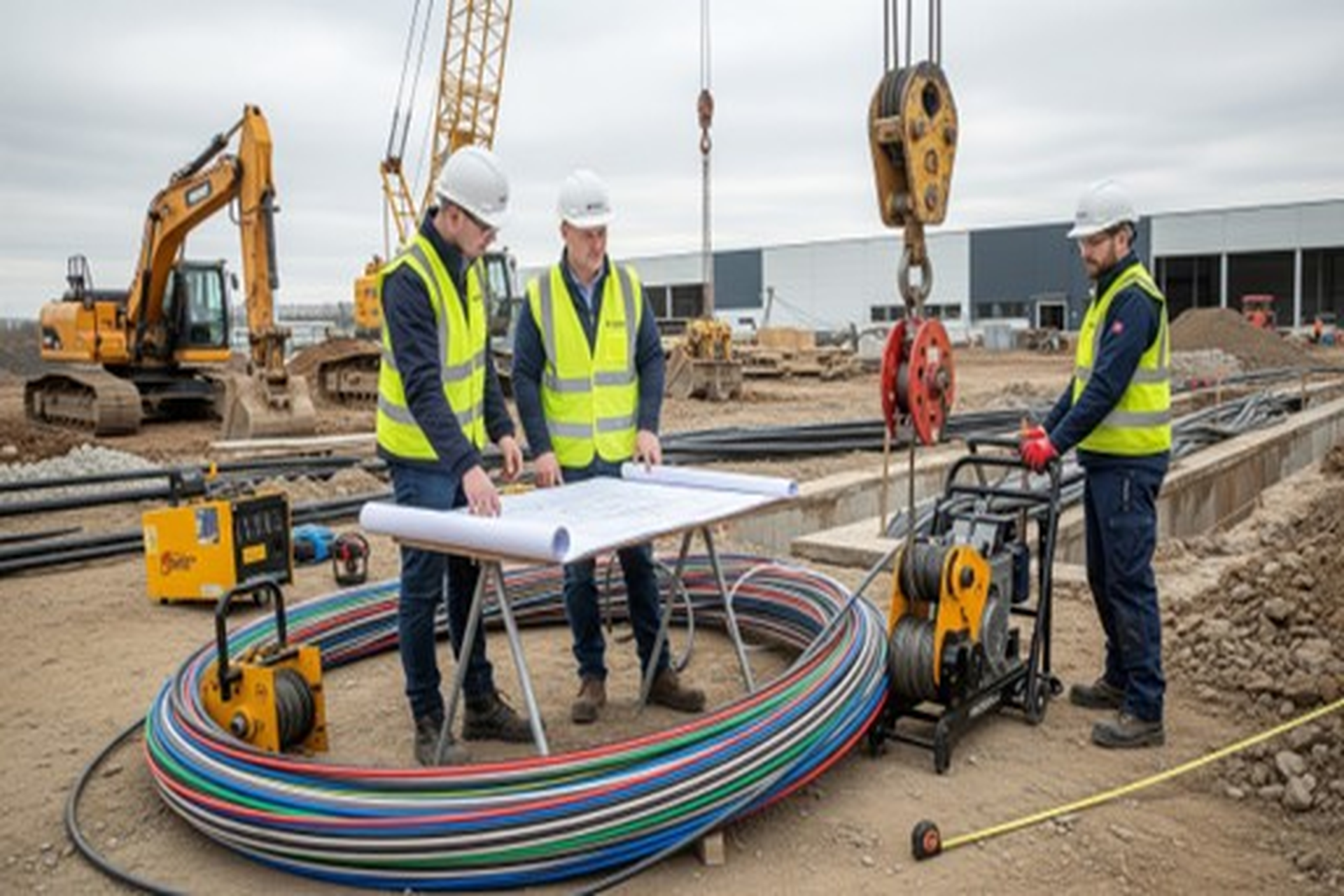
Industrial-scale cable pulling and installation projects are complex undertakings that require meticulous planning and execution. The success of these projects hinges on anticipating challenges and making informed decisions long before the first reel is unwound. Cutting corners in the preparatory phase can lead to costly delays, safety hazards, and compromised system integrity.
Before breaking ground, project managers and engineers must carefully evaluate several critical factors. Here is a guide to the essential considerations that will define the efficiency, safety, and longevity of your industrial cabling infrastructure.
1. Comprehensive Project Scope and Specification Review
The foundation of any successful project is a clear understanding of what needs to be achieved.
Detailed Cable Specifications
- Type and Quantity: Accurately determine the precise types (e.g., medium voltage, fiber optic, control) and total linear footage of every cable required.
- Weight and Diameter: These physical characteristics directly influence the equipment needed for pulling, the capacity of cable trays/conduits, and the bending radius requirements.
- Environmental Ratings: Ensure the cables are rated for the operating environment (e.g., temperature, moisture, chemical resistance, fire rating/LSZH).
Routing and Layout
- Define the Path: Establish the exact route from source to destination, accounting for existing infrastructure, elevation changes, and tight corners.
- Conduit and Tray Capacity: Verify that all planned pathways (conduits, trays, trenches) have adequate physical space and load-bearing capacity for the new cables. Oversizing pathways slightly can simplify installation and accommodate future expansion.
Access Points: Identify suitable pulling points, intermediate splice locations, and termination zones.
Geotechnical and Infrastructure Checks
- Ground Conditions: For underground installations, assess soil composition, potential water tables, and the presence of rock that may require trenching or specialized boring.
- Existing Utilities: Conduct thorough surveys (Ground Penetrating Radar, historical plans) to identify all existing buried utilities (gas, water, communications) to prevent dangerous strikes.
Environmental Constraints
- Operational Environment: Analyze ambient temperature, humidity levels, and any potential exposure to corrosive elements (e.g., in processing plants or coastal areas) that will affect cable material selection and installation techniques.
Permitting and Regulations: Secure all necessary permits (local and national) and ensure compliance with industry standards (e.g., NEC, IEC) and site-specific safety protocols.
3. Equipment, Tools, and Methodology
The right equipment and a well-defined methodology are paramount to safe and efficient pulling.
Pulling Equipment Selection
- Winch/Puller Capacity: Select winches and pullers with sufficient, but not excessive, capacity based on the calculated maximum pulling tension. Using equipment with insufficient capacity is dangerous; using oversized equipment can lead to accidental cable damage.
- Rope and Swivels: Utilize rated pulling ropes and breakaway swivels designed to shear if tension exceeds the cable’s maximum allowable limit.
Calculation of Pulling Tensions
- Tension Analysis: Perform detailed calculations for maximum anticipated pulling tension, especially for long pulls or runs with multiple bends. This requires factoring in cable weight, coefficient of friction (based on conduit material and lubricant), and the geometry of the route.
Lubrication Strategy: Choose the correct cable lubricant compatible with the cable jacket material and apply it strategically to minimize friction and tension.
4. Safety and Risk Management
Safety must be the non-negotiable priority, particularly in industrial environments.
Hazard Identification
- Live Infrastructure: Develop clear Lockout/Tagout (LOTO) procedures for areas near active electrical gear.
- Confined Spaces: Identify and plan for procedures related to working in confined spaces, including ventilation and rescue protocols.
- Work at Height: Ensure appropriate rigging, fall protection, and access equipment (lifts, scaffolding) are used for vertical runs and overhead tray work.
Training and Personnel
- Certification: Ensure all personnel involved, especially puller operators and riggers, are properly trained, certified, and experienced in industrial-scale cable installation techniques.
Communication Plan: Establish a clear, reliable communication protocol between the pulling end, the feeding end, and any intermediate tension monitors.
5. Logistics and Scheduling
A well-oiled logistics plan keeps the project on track and within budget.
Material Handling
- Delivery and Storage: Plan for the safe, secure, and weatherproof storage of cable reels on-site. Cables must be stored and handled in a manner that prevents damage to the jacket or internal conductors.
- Reel Management: Develop a clear system for tracking and staging reels, ensuring the correct cable lengths are fed in the right sequence and direction.
Contingency Planning
- Weather Delays: Build reasonable buffer time into the schedule to account for potential weather interruptions, especially for exterior work.
Damage Protocol: Establish a clear procedure for immediate action and repair should a cable be damaged during the pull or installation process.
By diligently addressing these five key factors—scope and specification, site readiness, equipment and methodology, safety, and logistics—industrial cable pulling and installation projects can transition from complex potential hazards to predictable, successful infrastructure deployments.